Sunday, January 23, 2022

What Are The Primary Auxiliaries And Modal Auxiliary Verbs With Examples

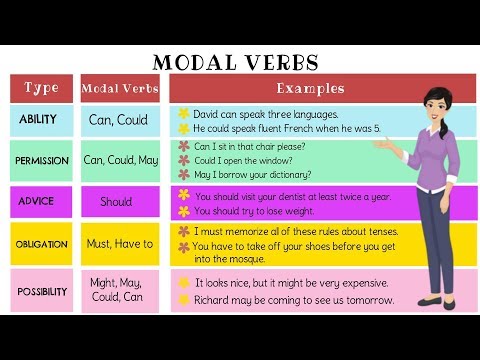
Have to and have got to break all of the rules that pure modal auxiliary verbs follow. Despite all of these differences, these semi-modal auxiliary verbs have several modal meanings. Modal auxiliary verbs, also commonly referred to as modal verbs or modals, are used to shift the meaning of the main verb in a clause.

what are the primary auxiliaries and modal auxiliary verbs with examples - Have to and have got to break all of the rules that pure modal auxiliary verbs follow

These shifts include expressing possibility, ability, permission, obligation, or future intention. Students can find these confusing because one modal auxiliary verb can have multiple meanings depending on the context. Auxiliary verbs usually accompany an infinitive verb or a participle, which respectively provide the main semantic content of the clause. An example is the verb have in the sentence I have finished my lunch.

what are the primary auxiliaries and modal auxiliary verbs with examples - Despite all of these differences

Here, the auxiliary have helps to express the perfect aspect along with the participle, finished. Some sentences contain a chain of two or more auxiliary verbs. Auxiliary verbs are also called helping verbs, helper verbs, or auxiliaries. Research has been conducted into split inflection in auxiliary verbs. In English there are two types of auxiliary verb, primary auxiliaries and modal auxiliaries.

what are the primary auxiliaries and modal auxiliary verbs with examples - Modal auxiliary verbs

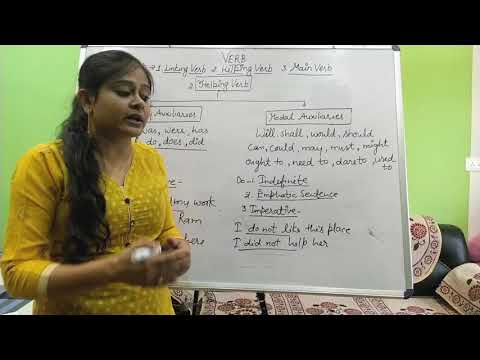
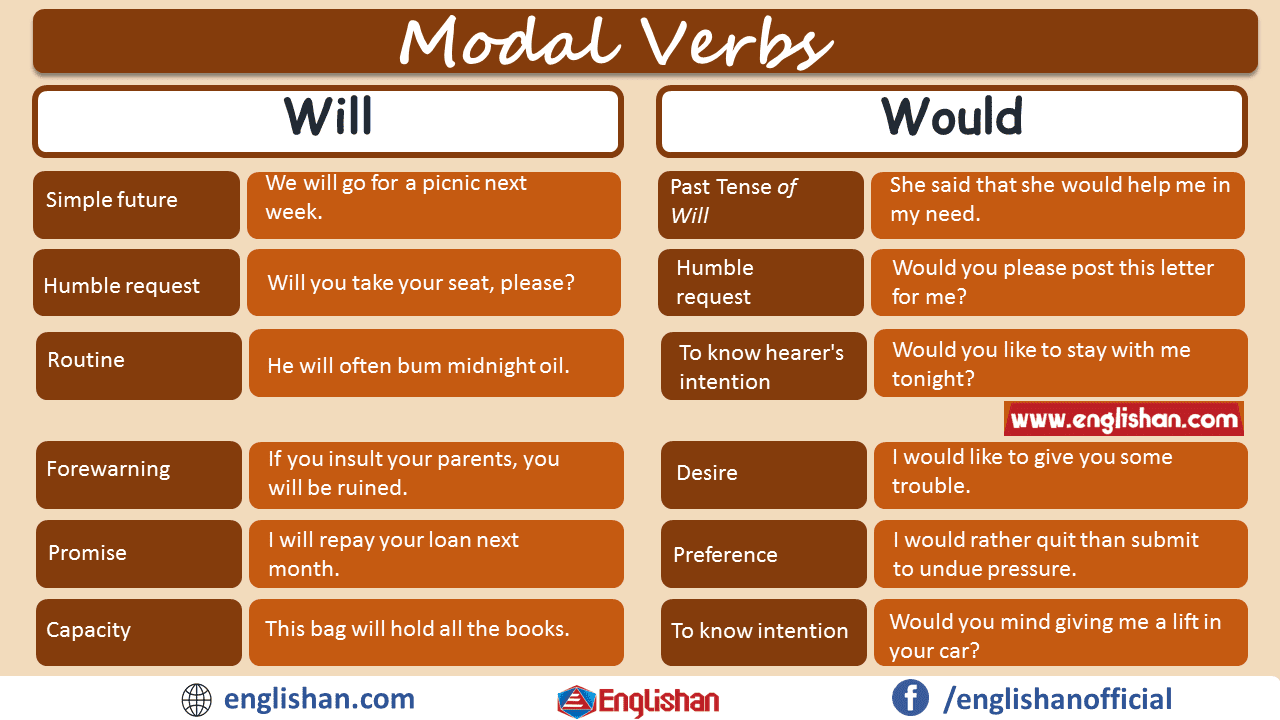
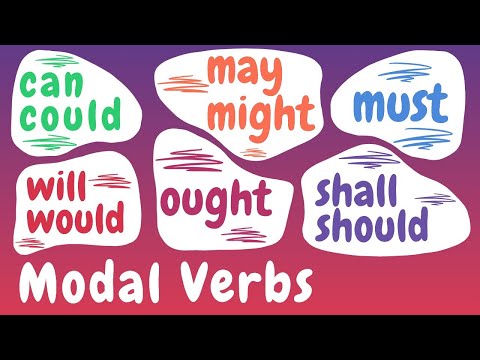
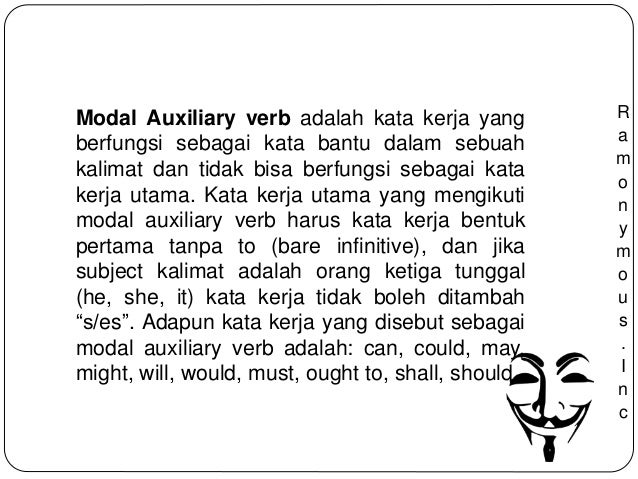
The three primary auxiliary verbs are 'be', 'have' and 'do'. … There are ten common modal auxiliary verbs and they are 'can', 'could', 'will', 'would', 'shall', 'should', 'may', 'might', 'must' and 'ought'. There are ten common modal auxiliary verbs and they are 'can', 'could', 'will', 'would', 'shall', 'should', 'may', 'might', 'must' and 'ought'. Some auxiliaries are usually called modal but often act to give grammatical information by forming a tense with a main verb. For this reason, some people will classifywill and would as Primary Auxiliary verbs.

what are the primary auxiliaries and modal auxiliary verbs with examples - These shifts include expressing possibility

That is a sensible approach because both verbs can act in both ways. The classification is then split so when they act as primary modal auxiliaries, that is what they should be called and likewise when they act as modal auxiliary verbs. The semi-modal auxiliary verb ought to ends in to, which makes the main verb an infinitive. This differs from pure-modal auxiliary verbs, which use the bare infinitive, the infinitive without to, for the main verb.

what are the primary auxiliaries and modal auxiliary verbs with examples - Students can find these confusing because one modal auxiliary verb can have multiple meanings depending on the context

The meaning of ought to is nearly the same as should in all cases. When forming questions or negatives, should is more commonly used than ought to. Modal verbs and auxiliary verbs are verbs that help other verbs to show meaning. Auxiliary verbs indicate information such as tense, mood, voice and other grammatical aspects of the action. Modal verbs are a type of auxiliary verbs that indicate the modality.

what are the primary auxiliaries and modal auxiliary verbs with examples - Auxiliary verbs usually accompany an infinitive verb or a participle

This week´s blog is about primary auxiliary verbs and modal auxiliary verbs. In English there are three primary auxiliaries; they are 'BE', 'HAVE' and 'DO'. There are ten common modals; they are 'CAN', 'COULD', 'WILL', 'WOULD', 'SHALL', 'SHOULD', 'MAY', 'MIGHT', 'MUST' and 'OUGHT'. Modal auxiliary verbs are used to show a necessity, capability, willingness, or possibility.

what are the primary auxiliaries and modal auxiliary verbs with examples - An example is the verb have in the sentence I have finished my lunch

Unlike most verbs, there is only one form of these verbs. Typically, verb forms change to indicate whether the sentence's structure is singular or plural. Most verbs also indicate whether something happened in the past, present, or future.
what are the primary auxiliaries and modal auxiliary verbs with examples - Here

This is not the case with most modal auxiliary verbs, which makes them simpler to understand and use correctly. Remember that modal auxiliary verbs help verbs to form the meaning of a sentence and they cannot be used as main verbs nor do we put two modals together in a sentence. We cannot say «I will might go to the cinema tonight», we either say «I will go to the cinema tonight» or «I might go to the cinema tonight». Auxiliary verbs, or helping verbs, are usually used together with a main verb to add extra meaning to a sentence. They can also be used to conjugate verbs in compound tenses, to ask and answer yes-no questions or to express negation and the passive voice. The modal auxiliary verbs are never used as a main verb.
what are the primary auxiliaries and modal auxiliary verbs with examples - Some sentences contain a chain of two or more auxiliary verbs

What Are Modal Auxiliary Verbs With Examples In addition, they do not have the five forms that main verbs have. While other auxiliary verbs can be used as a main verb and have the five forms, these modal auxiliary verbs do not. Auxiliary verbs are verbs that help the main verb to show its tense or form negation or questions.

What Are Modal Auxiliary Verbs With Examples

They add extra information to the main verb such as time, tense, grammatical aspect, modality, voice etc. There are three common helping verbs in the English language. If the negative forms can't, don't, won't, etc. are viewed as separate verbs , then the number of auxiliaries increases.

what are the primary auxiliaries and modal auxiliary verbs with examples - Research has been conducted into split inflection in auxiliary verbs

The verbs do and have can also function as full verbs or as light verbs, which can be a source of confusion about their status. Modal verbs are defective insofar as they cannot be inflected, nor do they appear as gerunds, infinitives, or participles. The verbs be and have are used as auxiliary verbs to form different tenses of main verbs. Be is used on its own to form the continuous tenses, while have is used to form the perfect tenses.

what are the primary auxiliaries and modal auxiliary verbs with examples - In English there are two types of auxiliary verb

Both have and been are used together to form the perfect continuous tenses. Be and have are used as auxiliaries to conjugate the continuous, perfect, and perfect continuous tenses. Do is used to make main verbs negative or to form interrogative sentences, and it can also be used to add emphasis to a sentence. The primary auxiliary 'BE' is used to form the continuous tenses and the passive voice.

what are the primary auxiliaries and modal auxiliary verbs with examples - The three primary auxiliary verbs are be

The word «am» is the first person singular of the auxiliary verb 'BE'. We can also say «He was eating dinner when we got home». The word «was» is how we use the auxiliary verb 'BE' in the third person singular of the past tense. If I say «They will be playing tennis at two o´clock today» the words «will be» communicate the future.
what are the primary auxiliaries and modal auxiliary verbs with examples -  There are ten common modal auxiliary verbs and they are can

Apart from the verbs mentioned above, there is also a separate category of auxiliary verbs known as Modal verbs. This category includes Can, Could, May, Might, Must, Ought to, Shall, Should, Will, and Would. Modal verbs are a category of auxiliary verbs and are often known as modal auxiliary verbs.

what are the primary auxiliaries and modal auxiliary verbs with examples - There are ten common modal auxiliary verbs and they are can

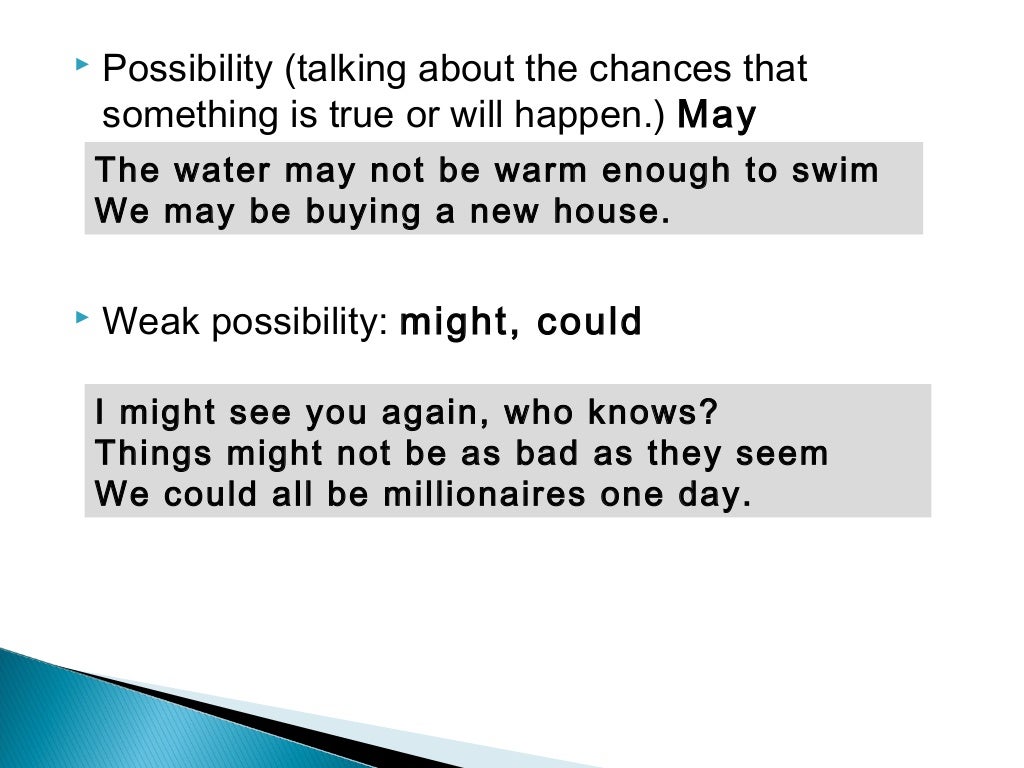
They can express possibility, probability, ability, permission, obligation, etc. See the section on Conditional Verb Forms for help with the modal auxiliary would. The shades of meaning among modal auxiliaries are multifarious and complex.
what are the primary auxiliaries and modal auxiliary verbs with examples - Some auxiliaries are usually called modal but often act to give grammatical information by forming a tense with a main verb

Most English-as-a-Second-Language textbooks will contain at least one chapter on their usage. For more advanced students, A University Grammar of English, by Randolph Quirk and Sidney Greenbaum, contains an excellent, extensive analysis of modal auxiliaries. In both these cases the verb is followed by the past participle of a lexical or main verb and used to form what is called the passive voice. The passive is often used when the doer of the action is unimportant or unknown and to lay stress on the action itself and the object of the action.
what are the primary auxiliaries and modal auxiliary verbs with examples - For this reason

In sentence e., the auxiliary be is used alongside the auxiliary have so this sentence shows both perfect aspect and passive voice. To make an interrogative sentence , the modal auxiliary verb is inverted with the subject. Modals verbs are never used with other auxiliary verbs such as do, be, and have. The negative is formed by simply adding not after the modal verb, and the interrogative is formed by the inversion of the subject and the verb. Unlike auxiliary verbs, modal verbs never change form; they cannot be inflected.

what are the primary auxiliaries and modal auxiliary verbs with examples - That is a sensible approach because both verbs can act in both ways

Modal verbs may or may not be classified as auxiliaries, depending on the language. In the case of English, verbs are often identified as auxiliaries based on their grammatical behavior, as described below. In some cases, verbs that function similarly to auxiliaries, but are not considered full members of that class , are called semi-auxiliaries.
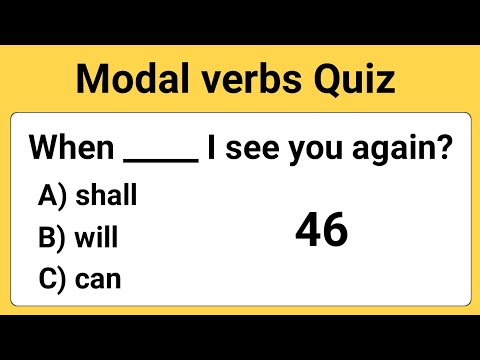
what are the primary auxiliaries and modal auxiliary verbs with examples - The classification is then split so when they act as primary modal auxiliaries

In French, for example, verbs such as devoir , pouvoir , aller , vouloir , faire , and laisser , when used together with the infinitive of another verb, can be called semi-auxiliaries. There has also been a study on auxiliary verb constructions in Dravidian languages. Since modal auxiliary verbs do not have a past tense form, we can use the modal auxiliary along with the word 'have' and a past participle. Past participles typically end in -d, -ed, -n, or -en, creating the past tense 'wished, looked, taken,' and so forth. Inversion refers to the reversal of the normal position of the subject and the auxiliary verb of a clause. We cannot use subject-verb inversion with main verbs to create interrogative sentences—we have to either add the auxiliary verb do, or else invert an existing auxiliary verb.

what are the primary auxiliaries and modal auxiliary verbs with examples - The semi-modal auxiliary verb ought to ends in to

The ten common modal auxiliary verbs are used to express necessity and possibility. To remind us, the ten common modals are 'CAN', 'COULD', 'WILL', 'WOULD', 'SHALL', 'SHOULD', 'MAY', 'MIGHT', 'MUST' and 'OUGHT'. The modal auxiliary verbs are auxiliary verbs that specifically affect the mood of the verb. Remember that verb mood is about the attitude in which the action or state is expressed-as a statement of fact or opinion, as a wish, as a possibility, or as a command. When this occurs, perfect aspect is superior to progressive aspect, e.g.

what are the primary auxiliaries and modal auxiliary verbs with examples - This differs from pure-modal auxiliary verbs

Prepared list of sentences using a wide range of modal auxiliary verbs . Modal auxiliary verbs like can, may, ought, shall, and wood are used to suggest an impending or possible upcoming action. Learn to identify modal auxiliary verbs, understand their purpose, and indicate past tense with the provided examples. You may have noticed that the future tenses also use the auxiliary verb will. This is one of the modal auxiliary verbs, which will be covered in a separate section.

what are the primary auxiliaries and modal auxiliary verbs with examples - The meaning of ought to is nearly the same as should in all cases

The primary verbs in English grammar are the verbs be, have, and do—all three of which can function as either main verbs or auxiliary verbs. We use the primary auxiliary 'HAVE' to form the perfect tenses. These tenses include the present, past and future perfect, the perfect continuous and the perfect conditional tenses.

what are the primary auxiliaries and modal auxiliary verbs with examples - When forming questions or negatives

To make a sentence using the present perfect tense we use the word 'have' and a past participle, for example «I have watched television all day». Had better is a two-word semi-modal auxiliary verb that has the same characteristics as pure modal auxiliary verbs. Will is becoming much more common than shall, and this trend seems to be continuing. The next two tables illustrate some of the similarities and differences between these two modal auxiliary verbs. Auxiliary verbs are used together with a main verb to show the verb's tense or to form a negative or question. Fred may be being judged to have been deceived by the explanation.Viewing this sentence as consisting of a single finite clause, it includes five auxiliary verbs.

what are the primary auxiliaries and modal auxiliary verbs with examples - Modal verbs and auxiliary verbs are verbs that help other verbs to show meaning

From the point of view of predicates, judged and scrutinized constitute the core of a predicate, and the auxiliary verbs contribute functional meaning to these predicates. These verb catenae are periphrastic forms of English, English being a relatively analytic language. Other languages, such as Latin, are synthetic, which means they tend to express functional meaning with affixes, not with auxiliary verbs. The following sections consider auxiliary verbs in English. They list auxiliary verbs, then present the diagnostics that motivate this special class (subject-auxiliary inversion and negation with not). The modal verbs are included in this class, due to their behavior with respect to these diagnostics.

what are the primary auxiliaries and modal auxiliary verbs with examples - Auxiliary verbs indicate information such as tense

Auxiliary verbs typically help express grammatical tense, aspect, mood, and voice. The auxiliary verbs of a language form a closed class, i.e., there is a fixed, relatively small number of them. Write down all the sentences with modal auxiliary verbs. Indicate what type of modal auxiliary verb is used in each sentence.
what are the primary auxiliaries and modal auxiliary verbs with examples - Modal verbs are a type of auxiliary verbs that indicate the modality

Other helping verbs, called modal auxiliaries or modals, such as can, could, may, might, must, ought to, shall, should, will, and would, do not change form for different subjects. For instance, try substituting any of these modal auxiliaries for can with any of the subjects listed below. Let's take a look at ought to, had better, have to, be able to, used to, and be supposed to.
what are the primary auxiliaries and modal auxiliary verbs with examples - This weeks blog is about primary auxiliary verbs and modal auxiliary verbs

We'll explain some of the reasons why these are not always categorized as modal auxiliary verbs. You'll also see some examples demonstrating their modality. The nine pure modal auxiliary verbs, will, shall, can, could, may, might, must, would, and should, share the same characteristics. Many sources and student textbooks do not differentiate between pure modal auxiliary verbs and semi-modal auxiliary verbs, and others separate them completely.
what are the primary auxiliaries and modal auxiliary verbs with examples - In English there are three primary auxiliaries they are BE

Some syntacticians distinguish between auxiliary verbs and light verbs. The two are similar insofar as both verb types contribute mainly just functional information to the clauses in which they appear. This activity will get students up and moving while they practice what they have learned about modal auxiliary verbs. The special verbs can, could, may, might, will, would, shall, should, must, ought, dare and need are called modal auxiliary verbs. Because of the flexibility of this verb , it is important to pay close attention to how it is used.

what are the primary auxiliaries and modal auxiliary verbs with examples - There are ten common modals they are CAN

When it is used as an auxiliary, like the primary and modal verbs, it will occupy the initial position in the verb phrase, and there will always be a non-finite lexical verb to follow. When it is used as a lexical verb, it may be preceded by an auxiliary verb or simply stand alone." You can see from that little exercise that it is not easy to disentangle the meanings in all cases.

what are the primary auxiliaries and modal auxiliary verbs with examples - Modal auxiliary verbs are used to show a necessity

Monday, January 10, 2022

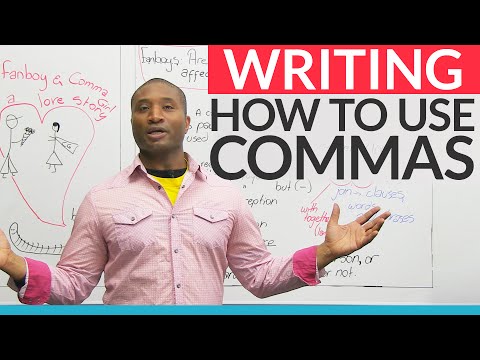
When Should Commas Be Used In A Sentence

Commas can also join independent clauses as long as the comma is followed by a coordinating conjunction . If you locate a run-on sentence and find where the two independent clauses "collide," you can decide how best to separate the clauses. Fixing run-on sentences is very similar to fixing comma splices. You can make two complete sentences by inserting a period. You can use a semicolon between the two clauses if they are of equal importance; this allows your reader to consider the points together.

when should commas be used in a sentence - Commas can also join independent clauses as long as the comma is followed by a coordinating conjunction

You can use a semicolon with a transition word to indicate a specific relation between the two clauses; however, you should use this sparingly. You can use a coordinating conjunction and a comma, and this also will indicate a relationship. Or, you can add a word to one clause to make it dependent.

when should commas be used in a sentence - If you locate a run-on sentence and find where the two independent clauses collide

Once you discover where the two independent clauses are "spliced," there are several ways to separate them. You can use a coordinating conjunction following the comma, and this also will indicate a relationship. For additional information on coordinating conjunctions, click HERE. See the note BELOW regarding the use of a comma between two independent clauses when the second independent clause begins with a parenthetical element or adverbial clause. A compound sentence contains two or more independent clauses linked by a coordinating conjunction.

when should commas be used in a sentence - Fixing run-on sentences is very similar to fixing comma splices

Independent clauses are those that can stand alone as complete sentences. The most common coordinating conjunctions are and, but, and or. In certain cases, nor, yet, so, and for act as coordinating conjunctions.

when should commas be used in a sentence - You can make two complete sentences by inserting a period

While knowing when to use commas is essential, knowing when not to use commas is just as important. A comma is not needed before the first item in a series, after the last item in a series, or between a subject and a verb. Also, a comma is not needed to set off a restrictive clause. Independent clauses have this name because they can function as complete sentences on their own.

when should commas be used in a sentence - You can use a semicolon between the two clauses if they are of equal importance this allows your reader to consider the points together

Two independent clauses might be separate sentences, but they also might express ideas that are related. In this case, we can join these separate thoughts using a coordinating conjunction. Contending that the coordinating conjunction is adequate separation, some writers will leave out the comma in a sentence with short, balanced independent clauses . If there is ever any doubt, however, use the comma, as it is always correct in this situation. Commas can be used to separate independent clauses, but with the addition of a coordinating conjunctions .

when should commas be used in a sentence - You can use a semicolon with a transition word to indicate a specific relation between the two clauses however

Use a semicolon between independent clauses joined by a coordinating conjunction if the clauses are already punctuated with commas or if the clauses are lengthy. A comma marks a slight break between different parts of a sentence. Used properly, commas make the meaning of sentences clear by grouping and separating words, phrases, and clauses. It is recommended that the comma be used cautiously and wisely.

when should commas be used in a sentence - You can use a coordinating conjunction and a comma

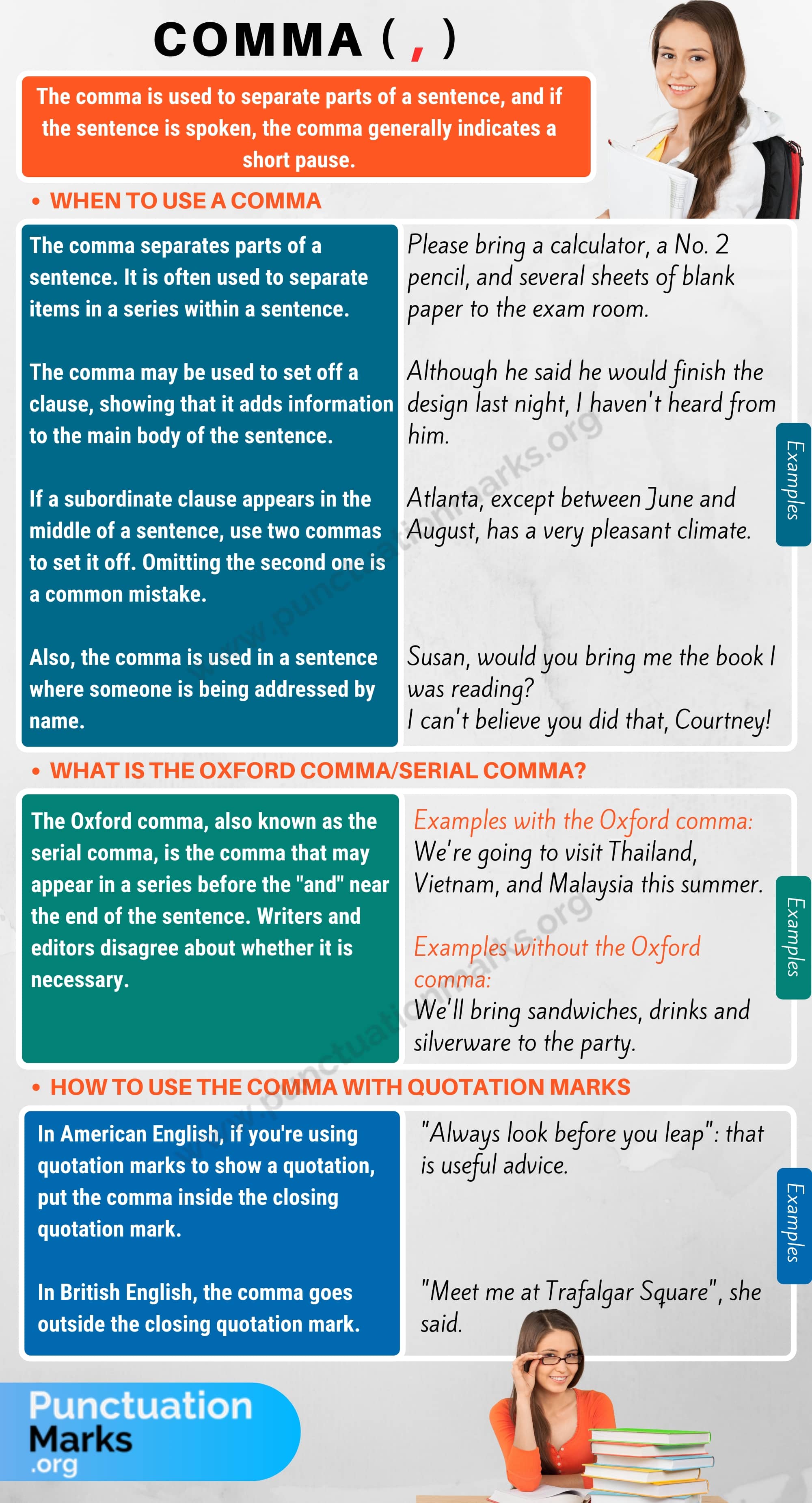
Its used to connect new ideas to old ones, and to tell the reader when to pause a moment in their thinking (or in their speaking, if they're reading out loud). In long sentences, it's also used to separate clauses, so the reader understands which modifiers apply to which words, etc. Click on the commas for further explanation of the rules of comma usage being used. If your computer is equipped with PowerPoint, click on the PowerPoint icon to the right for a brief PowerPoint presentation on comma usage. Use a comma to separate the elements in a series , including the last two.

when should commas be used in a sentence - Or

"He hit the ball, dropped the bat, and ran to first base." You may have learned that the comma before the "and" is unnecessary, which is fine if you're in control of things. However, there are situations when, if you don't use this comma , these last two items in the list will try to glom together . Using a comma between all the items in a series, including the last two, avoids this problem.

when should commas be used in a sentence - Once you discover where the two independent clauses are spliced

This last comma—the one between the word "and" and the preceding word—is often called the serial comma or the Oxford comma. In newspaper writing, incidentally, you will seldom find a serial comma, but that is not necessarily a sign that it should be omitted in academic prose. Though not necessarily mechanical, the use of commas in lists is well established. In this usage, the comma separates a series of words, phrases, or independent clauses. An independent clause is a unit of grammatical organization that includes both a subject and verb and can stand on its own as a sentence.

when should commas be used in a sentence - You can use a coordinating conjunction following the comma

In the previous example, "I went running" and "I saw a duck" are both independent clauses, and "and" is the coordinating conjunction that connects them. Similarly, it is common for someone to have to look up the same tricky word dozens of times before committing its proper spelling to memory. As with spelling, commas must be repeatedly challenged in your writing.

when should commas be used in a sentence - For additional information on coordinating conjunctions

As you perfect your comma usage you are also recognizing and reevaluating your sentence patterns, and the rewards are numerous. I often recommend to students with comma problems that they re-read their work one last time, just focusing on their comma use, before turning in a paper as a final version. Both parts of the sentence are independent clauses, and commas should not be used to connect independent clauses if there is no coordinating conjunction. Paired with coordinating conjunctions to separate independent clauses from each other. This is a common error made by students and adult writers alike! When writers use a comma by itself between two independent clauses, this is called a comma splice.

when should commas be used in a sentence - See the note BELOW regarding the use of a comma between two independent clauses when the second independent clause begins with a parenthetical element or adverbial clause

Are paired with coordinating conjunctions to separate independent clauses from each other. When you insert a comma between independent clauses, it must be accompanied by one of the coordinating conjunctions. Use a semicolon to replace a comma when you use a coordinating conjunction to link independent clauses that already contain commas. A comma indicates a pause between the ending of an introductory word, phrase, or clause, and the beginning of the main part of the sentence.

when should commas be used in a sentence - A compound sentence contains two or more independent clauses linked by a coordinating conjunction

The most common introductory word groups are clauses or phrases which function as adverbs, telling how, why, when, where, or under what conditions something happened. Other introductory elements may include prepositional phrases, adjective clauses or phrases, participial phrases, infinitive phrases, and transitional expressions. As you may recall from above, an independent clause has a subject and a verb and can stand on its own as a sentence.

when should commas be used in a sentence - Independent clauses are those that can stand alone as complete sentences

Often, a coordinating conjunction will connect two independent clauses — like the word "but." They occur when someone joins two independent clauses with an unnecessary comma. You can prevent this problem by adding a conjunction or breaking the clauses into two separate sentences. Use a semicolon between two independent clauses that are connected by conjunctive adverbs or transitional phrases. Comma and a coordinating conjunction is needed to separate independent clauses from one another. Many inexperienced writers run two independent clauses together by using a comma instead of a period.

when should commas be used in a sentence - The most common coordinating conjunctions are and

This results in the dreaded run-on sentence or, more technically, acomma splice. Coordinating conjunctions are conjunctions, or joining words, that are placed between words and phrases of equal importance. Used with coordinating conjunctions, commas allow writers to express how their complete thoughts relate to one another. They also help avoid the choppy, flat style that arises when every thought stands as a separate sentence. In the preceding examples, note the comma after sister and late. Nonessential words, clauses, and phrases that occur midsentence must be enclosed by commas.

when should commas be used in a sentence - In certain cases

Following are two instances of the need for an appositive comma with one or more nouns. This results in the dreaded run-on sentence or, more technically, a comma splice. A compound sentence must have two independent clauses – not just two verbs, two nouns, or two groups of words that are not independent clauses. When correcting a comma splice, that is when joining two independent clauses with a coordinating conjunction, put the comma before and.

when should commas be used in a sentence - While knowing when to use commas is essential

If the word is restrictive, commas should not be used; if the word is nonrestrictive, commas are required. Often students will mistake coordinate nouns, verbs, adjectives, and adverbs for coordinate clauses. To make sure that you do not make this mistake, read each clause on either side of the comma and coordinating conjunction carefully. A comma works here because it separates two independent clauses , the second of which begins with a coordinating conjunction. A comma is needed when a FANBOYS word is used to separate two independent clauses to form a compound sentence.

when should commas be used in a sentence - A comma is not needed before the first item in a series

Use a semicolon to join two related independent clauses in place of a comma and a coordinating conjunction . Make sure when you use the semicolon that the connection between the two independent clauses is clear without the coordinating conjunction. Use a semicolon to join two related independent clauses in place of a comma and a coordinating conjunction. A comma is needed in a sentence before the conjunctionsand, but, for, nor, yet, or, soto separate the two independent clauses. You should always have a comma before FANBOYS that join two independent clauses . Look carefully at the next two sentences to see two independent clauses separated by comma + FANBOYS.

when should commas be used in a sentence - Also

A simple sentence contains only one independent clause and no dependent clauses. When a simple sentence contains a conjunction, you might be tempted to insert a comma before the conjunction, as you do with a compound sentence. With a simple sentence, however, the general rule is to omit the comma. Many people are uncertain about the use of commas, though, and often sprinkle them throughout their writing without knowing the basic rules.

when should commas be used in a sentence - Independent clauses have this name because they can function as complete sentences on their own

Comma cannot connect two independent clauses alone; it must be connected to a coordinating conjunction. Generally, when you join independent clauses with a coordinating conjunction, insert a comma before the conjunction. Writers can give readers information that limits or otherwise modifies a main idea that follows. To do so, writers can use introductory words or introductory phrases. These introductory elements can be one word or several.

when should commas be used in a sentence - Two independent clauses might be separate sentences

Common introductory elements include transition words and statements about time, place, manner, or condition. Commas are necessary before a coordinating conjunction that separates two independent clauses. If the independent clauses are not joined by a conjunction, i.e., and, or, nor, but, etc., then the correct mark is the semicolon (;), see more under . The comma functions as a tool to indicate to readers a certain separation of words, phrases, or ideas in order to prevent misreading the writer's intended meaning.

when should commas be used in a sentence - In this case

When a sentence is spoken aloud, a comma often represents a pause, which in verbal conversation functions to clarify meaning. The comma is used according to specific rules that relate to grammatical structures within the sentence. Consistency in the use of commas allows the reader to be assured of proper interpretation of the writer's intentions.

when should commas be used in a sentence - Contending that the coordinating conjunction is adequate separation

To join two closely related independent clauses that are not joined by a coordinating conjunction. When you want to join two independent clauses, you need a conjunction or a semicolon. Don't use a comma to join two independent clauses without a conjunction. Just because it's a little squiggle doesn't mean it shouldn't be paid a lot of attention.

when should commas be used in a sentence - If there is ever any doubt

Studying this ruler of the grammar world will provide beneficial and long-lasting effects. Most people don't walk out of the house without a care for how they look. Who wants to put out something with glaring errors and total disregard for this important piece of punctuation? Now that you understand the power of the comma, turn your attention to mastering correct usage of other often-misused punctuation marks.

when should commas be used in a sentence - Commas can be used to separate independent clauses

Have you ever seen the face a baby makes when tasting lemon for the first time? If you don't see any FANBOYS between two independent clauses , you should never see a comma. Without the presence of FANBOYS, commas just don't belong. Some phrases, clauses, and terms interrupt the flow of a sentence and should be enclosed in commas.

when should commas be used in a sentence - Use a semicolon between independent clauses joined by a coordinating conjunction if the clauses are already punctuated with commas or if the clauses are lengthy

Examples of these interrupters are conjunctive adverbs, transitional phrases, and names in direct address. As you learn about commas, first, recognize that they signal a pause; second, know which rules can be bent without misleading your reader. Commas are the most frequently used internal punctuation in sentences, and people have more questions about them than about any other punctuation mark. One reason is that different editors have different opinions about when a comma is needed. You're likely to read one book in which commas abound, while in another text, they are scarce.

when should commas be used in a sentence - A comma marks a slight break between different parts of a sentence

Both clauses are independent and could stand on their own as complete sentences. When they are joined in the same sentence, however, they must be connected with a comma and a coordinating conjunction. When joining two independent clauses, or clauses that could stand on their own as full sentences, place a comma before the conjunction. If the second independent clause is very short, or if it is an imperative, the comma can be omitted. Commas are one of the most frequently used punctuation marks in the English language - they're also one of the most misused.

when should commas be used in a sentence - Used properly

Commas signify a pause between different parts of a sentence, making the meaning clearer and the writing easier to read. In English, commas are used to separate parts of sentences. Use a comma to separate elements of a list, distinguish groups of words that go together, mark conjunctions between complete thoughts, and more. This handout offers seven easy steps to deciding when to use a comma. A comma splice is a sentence that has two or more independent clauses joined only by a comma.

when should commas be used in a sentence - It is recommended that the comma be used cautiously and wisely

(i.e., one with two independent clauses joined by the conjunction but), the rule for which is to insert a comma before the conjunction. A complex sentence contains an independent clause and one or more dependent clauses. A dependent clause, unlike an independent clause, cannot stand on its own as a complete sentence.

when should commas be used in a sentence - Its used to connect new ideas to old ones

How To Remove Button Decoration

To remove the remaining default styles of the button, you will need to add several more properties. Return to your styles.css file in your t...