Commas can also join independent clauses as long as the comma is followed by a coordinating conjunction . If you locate a run-on sentence and find where the two independent clauses "collide," you can decide how best to separate the clauses. Fixing run-on sentences is very similar to fixing comma splices. You can make two complete sentences by inserting a period. You can use a semicolon between the two clauses if they are of equal importance; this allows your reader to consider the points together.

You can use a semicolon with a transition word to indicate a specific relation between the two clauses; however, you should use this sparingly. You can use a coordinating conjunction and a comma, and this also will indicate a relationship. Or, you can add a word to one clause to make it dependent.
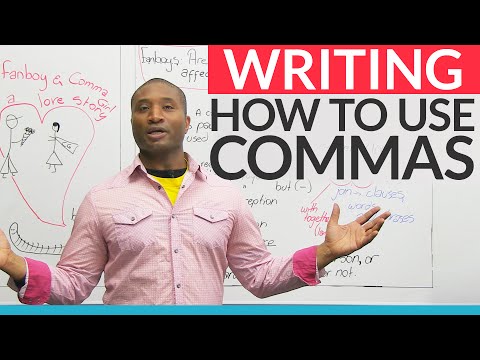
Once you discover where the two independent clauses are "spliced," there are several ways to separate them. You can use a coordinating conjunction following the comma, and this also will indicate a relationship. For additional information on coordinating conjunctions, click HERE. See the note BELOW regarding the use of a comma between two independent clauses when the second independent clause begins with a parenthetical element or adverbial clause. A compound sentence contains two or more independent clauses linked by a coordinating conjunction.

Independent clauses are those that can stand alone as complete sentences. The most common coordinating conjunctions are and, but, and or. In certain cases, nor, yet, so, and for act as coordinating conjunctions.

While knowing when to use commas is essential, knowing when not to use commas is just as important. A comma is not needed before the first item in a series, after the last item in a series, or between a subject and a verb. Also, a comma is not needed to set off a restrictive clause. Independent clauses have this name because they can function as complete sentences on their own.
Two independent clauses might be separate sentences, but they also might express ideas that are related. In this case, we can join these separate thoughts using a coordinating conjunction. Contending that the coordinating conjunction is adequate separation, some writers will leave out the comma in a sentence with short, balanced independent clauses . If there is ever any doubt, however, use the comma, as it is always correct in this situation. Commas can be used to separate independent clauses, but with the addition of a coordinating conjunctions .
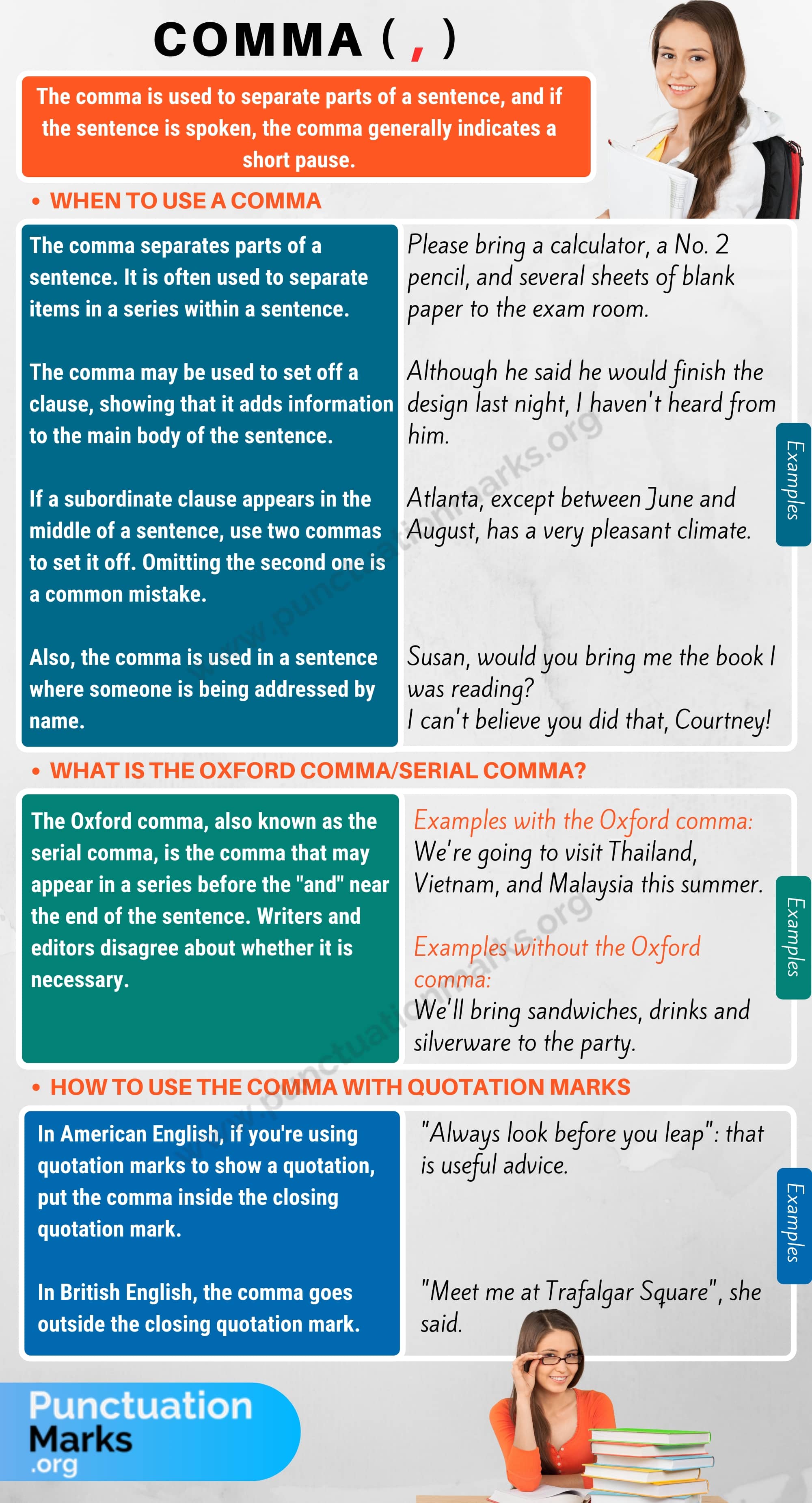
Use a semicolon between independent clauses joined by a coordinating conjunction if the clauses are already punctuated with commas or if the clauses are lengthy. A comma marks a slight break between different parts of a sentence. Used properly, commas make the meaning of sentences clear by grouping and separating words, phrases, and clauses. It is recommended that the comma be used cautiously and wisely.

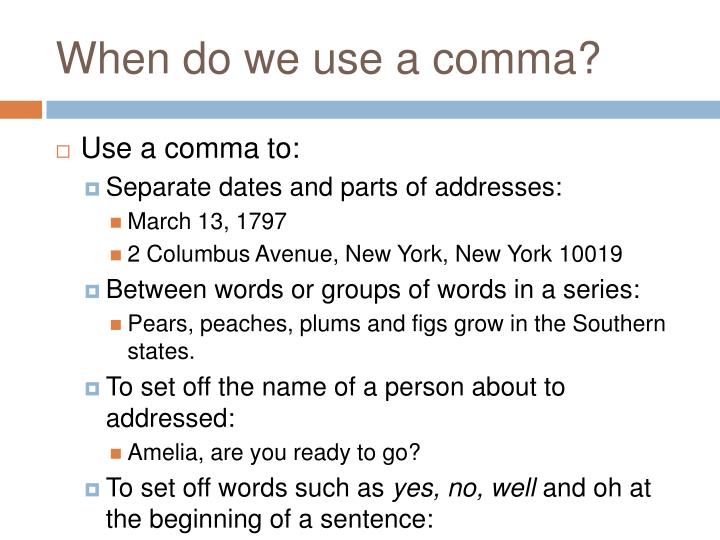
Its used to connect new ideas to old ones, and to tell the reader when to pause a moment in their thinking (or in their speaking, if they're reading out loud). In long sentences, it's also used to separate clauses, so the reader understands which modifiers apply to which words, etc. Click on the commas for further explanation of the rules of comma usage being used. If your computer is equipped with PowerPoint, click on the PowerPoint icon to the right for a brief PowerPoint presentation on comma usage. Use a comma to separate the elements in a series , including the last two.

"He hit the ball, dropped the bat, and ran to first base." You may have learned that the comma before the "and" is unnecessary, which is fine if you're in control of things. However, there are situations when, if you don't use this comma , these last two items in the list will try to glom together . Using a comma between all the items in a series, including the last two, avoids this problem.

This last comma—the one between the word "and" and the preceding word—is often called the serial comma or the Oxford comma. In newspaper writing, incidentally, you will seldom find a serial comma, but that is not necessarily a sign that it should be omitted in academic prose. Though not necessarily mechanical, the use of commas in lists is well established. In this usage, the comma separates a series of words, phrases, or independent clauses. An independent clause is a unit of grammatical organization that includes both a subject and verb and can stand on its own as a sentence.

In the previous example, "I went running" and "I saw a duck" are both independent clauses, and "and" is the coordinating conjunction that connects them. Similarly, it is common for someone to have to look up the same tricky word dozens of times before committing its proper spelling to memory. As with spelling, commas must be repeatedly challenged in your writing.

As you perfect your comma usage you are also recognizing and reevaluating your sentence patterns, and the rewards are numerous. I often recommend to students with comma problems that they re-read their work one last time, just focusing on their comma use, before turning in a paper as a final version. Both parts of the sentence are independent clauses, and commas should not be used to connect independent clauses if there is no coordinating conjunction. Paired with coordinating conjunctions to separate independent clauses from each other. This is a common error made by students and adult writers alike! When writers use a comma by itself between two independent clauses, this is called a comma splice.

Are paired with coordinating conjunctions to separate independent clauses from each other. When you insert a comma between independent clauses, it must be accompanied by one of the coordinating conjunctions. Use a semicolon to replace a comma when you use a coordinating conjunction to link independent clauses that already contain commas. A comma indicates a pause between the ending of an introductory word, phrase, or clause, and the beginning of the main part of the sentence.

The most common introductory word groups are clauses or phrases which function as adverbs, telling how, why, when, where, or under what conditions something happened. Other introductory elements may include prepositional phrases, adjective clauses or phrases, participial phrases, infinitive phrases, and transitional expressions. As you may recall from above, an independent clause has a subject and a verb and can stand on its own as a sentence.
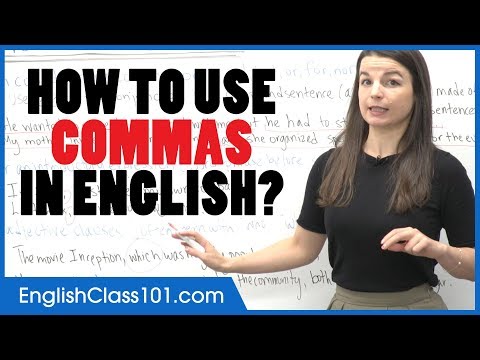
Often, a coordinating conjunction will connect two independent clauses — like the word "but." They occur when someone joins two independent clauses with an unnecessary comma. You can prevent this problem by adding a conjunction or breaking the clauses into two separate sentences. Use a semicolon between two independent clauses that are connected by conjunctive adverbs or transitional phrases. Comma and a coordinating conjunction is needed to separate independent clauses from one another. Many inexperienced writers run two independent clauses together by using a comma instead of a period.

This results in the dreaded run-on sentence or, more technically, acomma splice. Coordinating conjunctions are conjunctions, or joining words, that are placed between words and phrases of equal importance. Used with coordinating conjunctions, commas allow writers to express how their complete thoughts relate to one another. They also help avoid the choppy, flat style that arises when every thought stands as a separate sentence. In the preceding examples, note the comma after sister and late. Nonessential words, clauses, and phrases that occur midsentence must be enclosed by commas.

Following are two instances of the need for an appositive comma with one or more nouns. This results in the dreaded run-on sentence or, more technically, a comma splice. A compound sentence must have two independent clauses – not just two verbs, two nouns, or two groups of words that are not independent clauses. When correcting a comma splice, that is when joining two independent clauses with a coordinating conjunction, put the comma before and.

If the word is restrictive, commas should not be used; if the word is nonrestrictive, commas are required. Often students will mistake coordinate nouns, verbs, adjectives, and adverbs for coordinate clauses. To make sure that you do not make this mistake, read each clause on either side of the comma and coordinating conjunction carefully. A comma works here because it separates two independent clauses , the second of which begins with a coordinating conjunction. A comma is needed when a FANBOYS word is used to separate two independent clauses to form a compound sentence.

Use a semicolon to join two related independent clauses in place of a comma and a coordinating conjunction . Make sure when you use the semicolon that the connection between the two independent clauses is clear without the coordinating conjunction. Use a semicolon to join two related independent clauses in place of a comma and a coordinating conjunction. A comma is needed in a sentence before the conjunctionsand, but, for, nor, yet, or, soto separate the two independent clauses. You should always have a comma before FANBOYS that join two independent clauses . Look carefully at the next two sentences to see two independent clauses separated by comma + FANBOYS.

A simple sentence contains only one independent clause and no dependent clauses. When a simple sentence contains a conjunction, you might be tempted to insert a comma before the conjunction, as you do with a compound sentence. With a simple sentence, however, the general rule is to omit the comma. Many people are uncertain about the use of commas, though, and often sprinkle them throughout their writing without knowing the basic rules.

Comma cannot connect two independent clauses alone; it must be connected to a coordinating conjunction. Generally, when you join independent clauses with a coordinating conjunction, insert a comma before the conjunction. Writers can give readers information that limits or otherwise modifies a main idea that follows. To do so, writers can use introductory words or introductory phrases. These introductory elements can be one word or several.

Common introductory elements include transition words and statements about time, place, manner, or condition. Commas are necessary before a coordinating conjunction that separates two independent clauses. If the independent clauses are not joined by a conjunction, i.e., and, or, nor, but, etc., then the correct mark is the semicolon (;), see more under . The comma functions as a tool to indicate to readers a certain separation of words, phrases, or ideas in order to prevent misreading the writer's intended meaning.
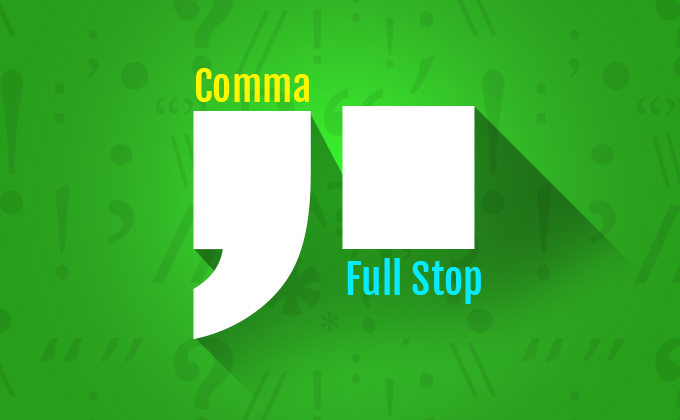
When a sentence is spoken aloud, a comma often represents a pause, which in verbal conversation functions to clarify meaning. The comma is used according to specific rules that relate to grammatical structures within the sentence. Consistency in the use of commas allows the reader to be assured of proper interpretation of the writer's intentions.

To join two closely related independent clauses that are not joined by a coordinating conjunction. When you want to join two independent clauses, you need a conjunction or a semicolon. Don't use a comma to join two independent clauses without a conjunction. Just because it's a little squiggle doesn't mean it shouldn't be paid a lot of attention.
Studying this ruler of the grammar world will provide beneficial and long-lasting effects. Most people don't walk out of the house without a care for how they look. Who wants to put out something with glaring errors and total disregard for this important piece of punctuation? Now that you understand the power of the comma, turn your attention to mastering correct usage of other often-misused punctuation marks.

Have you ever seen the face a baby makes when tasting lemon for the first time? If you don't see any FANBOYS between two independent clauses , you should never see a comma. Without the presence of FANBOYS, commas just don't belong. Some phrases, clauses, and terms interrupt the flow of a sentence and should be enclosed in commas.

Examples of these interrupters are conjunctive adverbs, transitional phrases, and names in direct address. As you learn about commas, first, recognize that they signal a pause; second, know which rules can be bent without misleading your reader. Commas are the most frequently used internal punctuation in sentences, and people have more questions about them than about any other punctuation mark. One reason is that different editors have different opinions about when a comma is needed. You're likely to read one book in which commas abound, while in another text, they are scarce.

Both clauses are independent and could stand on their own as complete sentences. When they are joined in the same sentence, however, they must be connected with a comma and a coordinating conjunction. When joining two independent clauses, or clauses that could stand on their own as full sentences, place a comma before the conjunction. If the second independent clause is very short, or if it is an imperative, the comma can be omitted. Commas are one of the most frequently used punctuation marks in the English language - they're also one of the most misused.
Commas signify a pause between different parts of a sentence, making the meaning clearer and the writing easier to read. In English, commas are used to separate parts of sentences. Use a comma to separate elements of a list, distinguish groups of words that go together, mark conjunctions between complete thoughts, and more. This handout offers seven easy steps to deciding when to use a comma. A comma splice is a sentence that has two or more independent clauses joined only by a comma.
(i.e., one with two independent clauses joined by the conjunction but), the rule for which is to insert a comma before the conjunction. A complex sentence contains an independent clause and one or more dependent clauses. A dependent clause, unlike an independent clause, cannot stand on its own as a complete sentence.


No comments:
Post a Comment
Note: Only a member of this blog may post a comment.